
Preventing PPH Mortality Globally: How Are We Doing?
Date:
July 10, 2025
On 10 July 2025, the Postpartum Hemorrhage Community of Practice (PPH CoP) hosted a webinar to explore global progress in preventing deaths from postpartum hemorrhage. Experts…
July 10, 2025
On 10 July 2025, the Postpartum Hemorrhage Community of Practice (PPH CoP) hosted a webinar to explore global progress in preventing deaths from postpartum hemorrhage. Experts…
Source:
Date: July 10, 2025
Available in: English
On 10 July 2025, the Postpartum Hemorrhage Community of Practice (PPH CoP) hosted a webinar to explore global progress in preventing deaths from postpartum hemorrhage. Experts presented the latest trends in maternal mortality, a new global analysis of the causes of maternal deaths, and a case study from Uganda demonstrating how local networks of clinicians can drive impact.
The session offered data-driven insights and practical approaches for reducing PPH mortality worldwide. This resource is a consolidation of all the presentation slides shared during this webinar.
Speakers:
June 19, 2025
Sickle-cell disease (SCD) is a group of autosomal recessive haemoglobin disorders that results from a gene mutation in the β-subunit of haemoglobin. It is…
Source:
Date: June 19, 2025
Available in: English
Sickle-cell disease (SCD) is a group of autosomal recessive haemoglobin disorders that results from a gene mutation in the β-subunit of haemoglobin. It is a common inherited condition worldwide, affecting 7.74 million people. SCD is highly prevalent in sub-Saharan Africa, and causes a significant disease burden in other historically malaria-endemic regions of Africa, the Middle East, the Caribbean and South Asia. SCD also affects people in many other countries. Women who live with SCD are at higher risk for pregnancy complications.
The guideline will be useful to those directly providing care to women during pregnancy and when giving birth, such as obstetricians, midwives, nurses and general practitioners. This guideline will also be useful to health-care providers responsible for developing national and local health-care protocols and policies, as well as managers of maternal and child health programmes, and policy-makers in all settings. Finally, the information in this guideline will be useful for developing clinical tools for pre- and in-service training of health workers and health-system strengthening efforts to enhance their delivery of clinical care.
(View this resource as its own page.)
The Lancet, Countdown to 2030
April 14, 2025
Countries are making progress toward the Sustainable Development Goals (SDG) related to health, but the pace falls short of what would be needed to achieve the global targets on time, concludes a Countdown…
Source: The Lancet, Countdown to 2030
Date: April 14, 2025
Available in: English
Countries are making progress toward the Sustainable Development Goals (SDG) related to health, but the pace falls short of what would be needed to achieve the global targets on time, concludes a Countdown to 2030 report published by The Lancet.
The report presents data around three areas – (1) contextual factors; (2) mortality, causes of death and nutritional status; and (3) coverage, equity and service quality – then concludes with discussion on priority areas for action. These priorities include focusing on sub-Saharan Africa, strengthening health systems, protecting progress against crises, improving data, and revitalizing the global movement.
The main report was finished before the USAID fundings cuts in early 2025, but some authors have published a commentary discussing the impact that these cuts will have on reproductive, maternal, newborn, child and adolescent health (RMNCAH).
Report sections:
Section 1 discusses contextual factors that have limited global progress. These include population dynamics, economic threats, gender gaps including education, armed conflict, food insecurity as well as unhealthy food environments, and climate change.
Section 2 presents data on mortality, cause of death and nutritional status.
Key points:
Section 3 tracks 20 indicators related to healthcare during pre-pregnancy, pregnancy, infancy, childhood, and adolescence. These include: coverage along the continuum of care, the composition coverage index, and the slope index of inequality (SII).
Key points:
Learn more about Countdown’s measurement of equity and effective coverage.
Conclusions – The report concludes by calling for more focused effort on sub-Saharan Africa, better strategies for improving health systems, safeguarding against crises, improved monitoring and accountability, and revitalized global coordination.
(View this resource as its own page.)
April 7, 2025
Investing in midwives is a cost-effective and sustainable strategy to improve maternal and newborn health and well-being and reduce mortality. There is ample evidence to show that care provided by…
Source:
Date: April 7, 2025
Available in: English
Investing in midwives is a cost-effective and sustainable strategy to improve maternal and newborn health and well-being and reduce mortality. There is ample evidence to show that care provided by midwives is women centric, significantly advances maternal and newborn health outcomes, strengthens health systems, and helps build future healthier generations. Investments in quality midwifery care can help accelerate progress towards the achievement of sustainable development goals for health (SDG3) and gender equality (SDG5). Educated and regulated midwives can deliver 90% of essential sexual, reproductive, maternal, newborn, and adolescent health services. Achieving universal coverage of care provided by midwives can help avert almost two thirds of maternal and newborn deaths and stillbirths. This translates to over 4.3 million lives saved per year by 2035.
As countries strive to make the most of limited resources, midwifery models of care offer a proven, cost-effective and sustainable solution to achieve the best possible health outcomes. Investing in midwife-provided care yields substantial economic and social benefits, with a return of $16 for every $1 invested. Despite their huge impact, midwives form only 10% of the global sexual, reproductive, maternal, newborn, and adolescent health workforce and the potential of midwifery models of care remains persistently unrecognised and underutilized. As a result, the world continues to face a deficit of 900,000 midwives. Chronic and systemic underfunding, increased medicalisation and routine use of unnecessary interventions, further hindered by gender barriers in the health system and societies at large are major barriers to improving midwifery care.
The Midwifery Accelerator is a unified, evidence-driven global initiative aimed at significantly improving maternal and newborn health outcomes by scaling up midwifery models of care globally. It’s a coalition of UN health agencies (UNFPA, WHO, UNICEF), governments, funders, civil society, academia, private sector and other key stakeholders working together to integrate high-quality midwifery services into national health systems.This accelerator offers governments, funding partners and stakeholders a clear set of common, high-level priorities to align efforts, optimize investments and achieve measurable impact. Seven high-level priority actions are organized in three pillars as follows:
Pillar 1: Commit – Invest: Strengthen policy frameworks, and increase domestic and global investments.
Pillar 2: Educate – Deploy – Retain: Ensure quality education and professional development for midwives; deploy midwives strategically and retain midwives by creating a safe, supportive and accountable workplace.
Pillar 3: Advocate – Empower: Build midwife leadership, strengthen coalitions and amplify voices of women and communities for effective advocacy and accountability.
This Midwifery Accelerator builds on the Global Position Paper on Transitioning to Midwifery Models of Care that outlines “why” this investment is crucial. The Midwifery Implementation Guidance provides step-by-step details on “how” these priority actions can be effectively implemented.
This accelerator also aligns governments and partners around shared programme goals, and strategies to ensure sustainable impact at scale. It sets a strong global advocacy agenda to share best practices, and reinforce political commitments and financing.
This accelerator contributes towards achieving the Sustainable Development Goals, in particular relevant targets under SDG 3 (health and wellbeing) and SDG 5 (gender equality). In recognition that every health system is unique in how services are organized and delivered, financed, regulated and governed, the accelerators offer a set of priorities, and countries need to adapt their actions to their specific context. In line with the Every Woman Every Newborn Everywhere initiative, this accelerator builds a powerful coalition to ensure safe, respectful, and high-quality before, during and after pregnancy, childbirth and beyond to dramatically improve health and well-being outcomes for all women and newborns.
(View this resource as its own page.)
World Health Organization, UNICEF, UNFPA
April 7, 2025
Every day in 2023, over 700 women died from preventable causes related to pregnancy and childbirth – meaning that approximately one woman is dying every two minutes. Sustainable Development Goal…
Source: World Health Organization, UNICEF, UNFPA
Date: April 7, 2025
Available in: English

Every day in 2023, over 700 women died from preventable causes related to pregnancy and childbirth – meaning that approximately one woman is dying every two minutes.
Sustainable Development Goal (SDG) target 3.1 is to reduce maternal mortality to less than 70 maternal deaths per 100 000 live births by 2030.
The United Nations Maternal Mortality Estimation Inter-Agency Group (MMEIG) – comprising WHO, the United Nations Children’s Fund (UNICEF), the United Nations Population Fund (UNFPA), the World Bank Group and the United Nations Department of Economic and Social Affairs, Population Division (UNDESA/Population Division) has collaborated with external technical experts on a new round of estimates covering 2000 to 2023. The estimates represent the most up to date, internationally-comparable MMEIG estimates of maternal mortality, using refined input data and methods from previous rounds.
The report presents internationally comparable global, regional and country-level estimates and trends for maternal mortality between 2000 and 2023.
Management Sciences for Health, United States Agency for International Development (USAID), Gates Foundation
March, 2025
This forecasting supplement, which complements a general guidance document Quantification of Health Commodities: A Guide to Forecasting and Supply Planning for Procurement, will assist program managers, service…
Source: Management Sciences for Health, United States Agency for International Development (USAID), Gates Foundation
Date: March, 2025
Available in: English, French
This forecasting supplement, which complements a general guidance document Quantification of Health Commodities: A Guide to Forecasting and Supply Planning for Procurement, will assist program managers, service providers, and technical experts when conducting quantification of needs for priority reproductive, maternal, newborn, and child health medical products. It has been updated to include new products and recommendations from WHO.
This revision includes a significantly enhanced chapter on Postpartum Hemorrhage (PPH), along with improved forecasting algorithms and Excel-based tools—with and without examples—to better support country teams in quantifying priority RMNCH medical products, many of which are underutilized or newly recommended.
Key Updates and Revisions:
This latest version reflects 2023 World Health Organization (WHO) recommendations for PPH prevention, diagnosis and treatment, which emphasize two major changes:
To align with these updated recommendations and enhance usability, the following changes have been made:
These updates are intended to strengthen the country and partner teams’ ability to produce accurate and actionable forecasts, contributing to improved availability of lifesaving RMNCH commodities at all levels of care.
(View this resource as its own page.)
World Health Organization
February 12, 2025
This Roadmap represents a significant milestone in the global pursuit of enhanced maternal and perinatal health during epidemics and pandemics. It describes collaborative means to address the most pressing challenges…
Source: World Health Organization
Date: February 12, 2025
Available in: English

This Roadmap represents a significant milestone in the global pursuit of enhanced maternal and perinatal health during epidemics and pandemics. It describes collaborative means to address the most pressing challenges that hinder the generation of high-quality evidence on the direct and indirect effects of epidemics on maternal and perinatal health.
The Roadmap is relevant to multiple types of stakeholders working in the areas of maternal and perinatal health, global health security and surveillance, and medical products development.
(View this resource as its own page.)
World Health Organization
2024
Maternal and perinatal death surveillance and response (MPDSR) is an approach promoted by the World Health Organization (WHO) and partners to reduce maternal and perinatal mortality. MPDSR involves stakeholders in…
Source: World Health Organization
Date: 2024
Available in: English

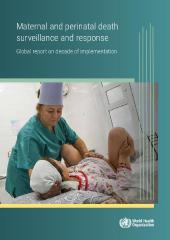
Maternal and perinatal death surveillance and response (MPDSR) is an approach promoted by the World Health Organization (WHO) and partners to reduce maternal and perinatal mortality. MPDSR involves stakeholders in the processes of identifying and reporting maternal and newborn deaths and stillbirths, understanding why the deaths occurred, taking actions to prevent similar deaths occurring in the future, monitoring implementation of actions and resulting changes, and promoting accountability for maternal and perinatal deaths.
The aim of this report is to describe progress on strengthening MPDSR over the last 10 years, as a follow up to the WHO and UNFPA Time to respond: a report on the global implementation of maternal death surveillance and response, published in 2016. The report describes improvements in policies, implementation and tracking of MPDSR implementation, and highlights how MPDSR can be successful in various contexts, such as humanitarian and fragile settings. Eight country case studies highlight examples of addressing barriers to MPDSR implementation by using the MPDSR approach to reduce maternal and perinatal mortality and increase accountability for maternal and perinatal deaths. Finally, the report outlines progress on MPDSR implementation since 2016, improvements in barriers to implementation, and highlights focus areas to further strengthen to 2030.
This report takes a systematic approach investigating in-depth the practice of using MPDSR in eight countries around the world with more than 160 semi-structured interviews. Through case studies from countries at different levels of progress in MPDSR implementation, it also reports on gaps and challenges in MPDSR implementation and shares experiences from countries on how these have been addressed. It is expected that this report will encourage the global health community of policy-makers, programme managers, health workers, civil society organizations (CSOs), professional societies, academic institutions, bilateral and multilateral agencies and foundations working in maternal, perinatal and newborn health to continue to strengthen MPDSR implementation and mobilize efforts and funding to overcome gaps and challenges that adversely affect maternal and perinatal survival.
(View this resource as its own page.)
The Lancet
November 16, 2024
The Global Burden of Disease Study 2021 reveals a significant yet uneven decline in stillbirths worldwide from 1990 to 2021, with the global stillbirth rate at 20 weeks’ gestation or…
Source: The Lancet
Date: November 16, 2024
Available in: English
The Global Burden of Disease Study 2021 reveals a significant yet uneven decline in stillbirths worldwide from 1990 to 2021, with the global stillbirth rate at 20 weeks’ gestation or longer decreasing by 39.8%, from 5.08 million in 1990 to 3.04 million in 2021. Despite this progress, the reduction in stillbirths lagged behind the 45.6% decline in neonatal deaths over the same period. The study highlights stark regional disparities, with South Asia and sub-Saharan Africa accounting for 77.4% of global stillbirths in 2021, up from 60.3% in 1990.
The findings underscore the need for targeted interventions in these regions to address the persistent high rates of stillbirths, particularly those occurring between 20 and 28 weeks’ gestation, which constituted 30.5% of the global total in 2021. The study emphasizes the importance of improving access to quality maternal healthcare, addressing socioeconomic disparities, and enhancing data collection and reporting systems to better monitor and prevent stillbirths.
(View this resource as its own page.)
November 10, 2024
This document provides a list of key WHO-recommended maternal and newborn health commodities and aims to accelerate progress towards the SDGs. It consolidates the key and enabling commodities from existing…
Source:
Date: November 10, 2024
Available in:

This document provides a list of key WHO-recommended maternal and newborn health commodities and aims to accelerate progress towards the SDGs. It consolidates the key and enabling commodities from existing WHO guidelines on maternal and newborn health.
The commodities included in the list are either critical for reducing maternal, fetal, and/or newborn deaths, or are essential for providing high-quality care.
(View this resource as its own page.)The Lancet Regional Health - Americas
November, 2024
Poor perinatal mental health (PMH) affects 13-30% of women globally, with higher rates in low- and middle-income countries. Biological, socioeconomic, and sociocultural factors, as well as gender inequalities, increase the…
Source: The Lancet Regional Health - Americas
Date: November, 2024
Available in: English
Poor perinatal mental health (PMH) affects 13-30% of women globally, with higher rates in low- and middle-income countries. Biological, socioeconomic, and sociocultural factors, as well as gender inequalities, increase the risk of poor PMH, especially for marginalized groups like non-binary people, trans men, and women with disabilities. Poor PMH has severe consequences for both mothers and infants, including increased risk of maternal mortality, obstetric complications, self-harm, and adverse infant outcomes.
Addressing PMH is crucial for improving maternal and child health, reducing poverty, and strengthening societies. USAID is committed to optimizing PMH through evidence-based interventions, addressing systemic barriers, and fostering collaboration with diverse stakeholders. This collective effort can improve maternal and child health, reduce maternal mortality, and break the cycle of intergenerational trauma associated with poor mental health.
(View this resource as its own page.)
The Lancet
October 26, 2024
Climate change is exacerbating health risks worldwide, from extreme heat events to flooding and hurricanes. Strengthening primary health care (PHC) is crucial for building climate-resilient health systems. PHC can address…
Source: The Lancet
Date: October 26, 2024
Available in: English
Climate change is exacerbating health risks worldwide, from extreme heat events to flooding and hurricanes. Strengthening primary health care (PHC) is crucial for building climate-resilient health systems. PHC can address climate-related health impacts like non-communicable diseases, malnutrition, and infectious diseases. Key strategies include investing in PHC workforce capacity, integrating climate and health data, and promoting integrated models of service delivery. While adaptation is essential, rapid reductions in greenhouse gas emissions are equally important. PHC professionals can play a role in both climate adaptation and mitigation by promoting healthy behaviors and advocating for sustainable policies. The World Health Organization’s Fourteenth Global Programme of Work provides a framework for these efforts, emphasizing multisectoral action and the importance of health in all policies.