
Holding Hope Close: The Power of Kangaroo Mother Care for the Smallest Newborns
Why Kangaroo Mother Care Matters
When I wrote to NICU nurses in Sierra Leone to ask for success stories from the country’s first two Kangaroo Mother Care (KMC) units – established by Project HOPE – I received eight stories in a single day. Each one was a testament to how KMC is a simple, lifesaving practice that transforms outcomes for the smallest and most vulnerable newborns.
From the stories the nurses shared, most of the babies were born to mothers facing life-threatening complications, and many were admitted to the neonatal ICU for extreme prematurity, often accompanied by further complications like respiratory distress. Yet, the nurses successfully managed to place these fragile newborns skin-to-skin with their mothers. Within a week or two, the babies were thriving enough to go home, and their mothers felt confident caring for their newborn.
One of those babies was KA who was born at 30 weeks weighing just 1.4 kgs after his mother experienced a premature rupture of membranes. On admission, his mother began KMC, holding him close to her chest, and providing the warmth, breastmilk and love, all essential to his growth.
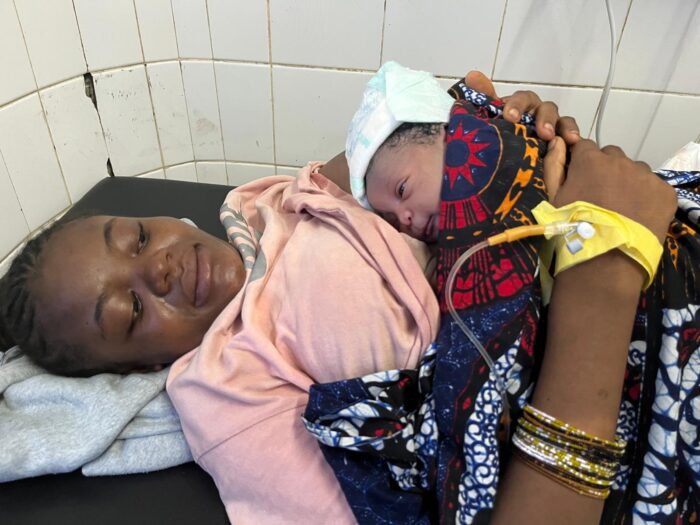
KMC is remarkably simple yet powerful: it involves holding a newborn against the mother’s chest, often alongside exclusive breastfeeding. In NICUs, the practice is called KMC; in delivery rooms, it’s often referred to as skin-to-skin. Either way, the goal is the same: keep mother and baby together. Ideally, KMC starts immediately after birth, continues during transport and is maintained for several weeks, especially for small or preterm newborns. Studies published in The Lancet and New England Journal of Medicine show that starting KMC immediately after birth, particularly while the baby is still critical, reduces neonatal mortality by 25% within the first 28 days of life.
After 10 days of KMC, KA’s weight increased to 1.7 kilograms. Once discharged, his mother continued practicing KMC at home and today KA is healthy and thriving.
KMC is not new – its benefits have been recognized for decades. Early studies from Brazil in the 1990s first highlighted that babies who stayed with their mothers had better outcomes. And in 2016, an updated Cochrane Review found that KMC is effective in reducing mortality by 40% among hospitalized infants with a birth weight less than 2 kg.
From field experience in Sierra Leone, KMC is effective because:
- It keeps newborns warm without relying on expensive technology, making it ideal in settings where incubators or warmers are limited or unreliable.
- Mothers feel empowered when they play an active role in their newborn’s recovery.
- Evidence shows stronger mother-newborn bonding and improved breastfeeding outcomes, both of which contribute to positive long-term health outcomes.
- It often allows many babies to be discharged earlier, reducing strain on overcrowded neonatal units and reinforcing trust in the practice.
- It’s culturally adaptable and aligns with baby-carrying practices already familiar in many communities, making it easier to adopt and sustain.
Bringing Kangaroo Mother Care to Life in Sierra Leone
Sierra Leone has made significant progress in lowering its neonatal mortality rate, and KMC plays a growing role in that success thanks to the combined efforts of the government, the United Nations, NGOs and dedicated health workers. While most neonatal nurses are familiar with KMC and comfortable implementing it, consistent practice still requires encouragement and support.
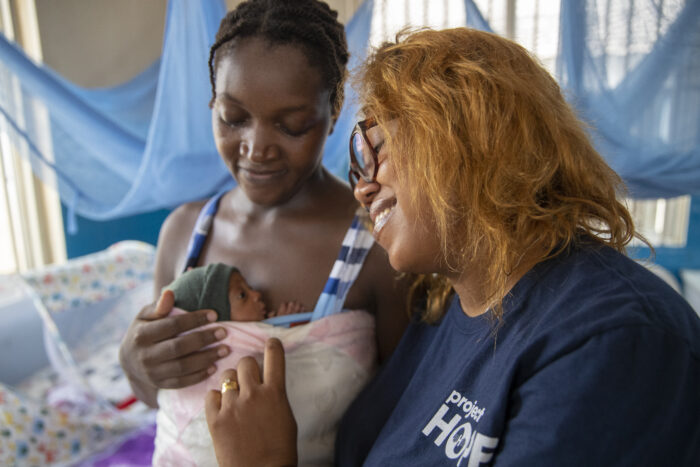
Culturally, Sierra Leonean women are accustomed to wrapping their babies on their abdomens, so the technique comes naturally but applying it in a clinical setting can look different. During a recent visit to Sierra Leone this past September, I noticed that no babies were in KMC. When I asked about it, nurses immediately initiated the practice, showing that even strong evidence-based practices like KMC require ongoing affirmation to be seen as a standard of quality care.
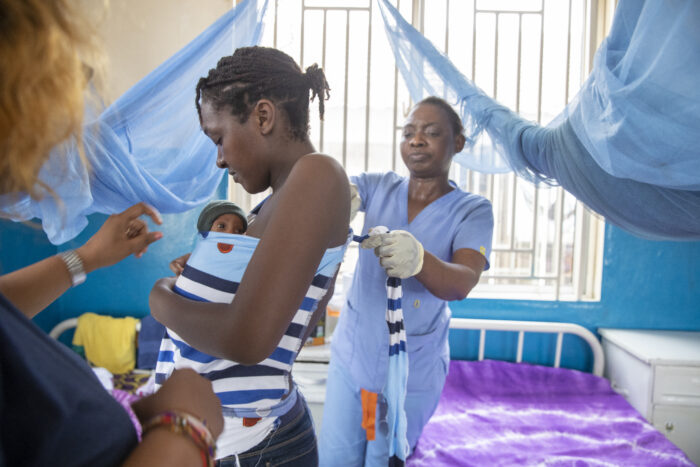
To support this, Project HOPE has established an in-house preceptor program, providing extra training and supervision to Ministry of Health-selected nurses from hospitals with NICUs. These preceptors stay connected through a WhatsApp group to share successes and challenges. Preceptors focus on ensuring KMC reaches babies in critical care, not just those in special units with beds for mothers. By emphasizing KMC in the ICU, we’ve seen a significant increase in the proportion of babies receiving lifesaving skin-to-skin care.
Project HOPE has also provided Essential Newborn Care training for trainers across nine health facilities, mainly in Freetown, and supported roll-out to all relevant staff. Follow-up mentoring, both from preceptors and external experts, reinforces skills and ensures that KMC is not just known but consistently practiced. These efforts are helping embed KMC as a life-saving standard of newborn care in Sierra Leone.
Looking Ahead: Sustaining and Scaling Success
Sierra Leone shows that scaling KMC isn’t just possible – it’s achievable even in the most resource-constrained environments.
Still, KMC faces resistance. Health workers worry about infection risk, especially in settings where mothers may have limited access to water and feel they aren’t “clean enough.” Others cite lack of space in NICUs, and staff feel it’s simply easier to treat newborns when the mother isn’t present. Many also believe that advanced technology is the only effective way to treat very small or sick newborns.
All of these barriers can be addressed through values clarification, ongoing mentorship, strong national guidelines and consistent enforcement. KMC remains one of the most cost-effective newborn interventions in the world.
What’s needed to expand KMC:
- National guidelines that reflect the latest evidence that immediate and continuous KMC improves health outcomes for mother and baby.
- Recognizing and encouraging the nurses who are already implementing KMC and making sure they receive feedback, training and supportive supervision that motivates them to keep prioritizing it
- Adding the percentage of newborns receiving KMC as a quality indicator in national health databases to ensure continued attention and accountability.
- Space planning that prioritizes KMC in neonatal and maternal units.
- Community engagement so families understand and expect KMC as part of newborn care.
Call to Action: Holding Hope Close
Baby KA – once just 1.4kgs – is now home, growing and thriving. His story is not an exception. It is what becomes possible when mothers, nurses, and health systems are empowered to keep newborns close.
To help more babies survive and thrive, we must:
- Advocate for policies that keep mothers and newborns together from the moment of birth.
- Continue investing in health worker and manager training, mentoring, supervision and accountability.
- Support organizations and governments working to expand KMC.
- Champion low-cost, evidence-based newborn interventions in global health conversations.
The momentum is here—but sustaining it requires all of us. By championing KMC, we take a stand for equity, evidence, and the profound power of human connection to save lives.