The Power of Facility-Based Data to Improve Care and Save Mothers and Newborns
Myagdi District, Gandaki Province, Nepal — It’s seven in the morning. As many people take their first sip of tea, nurses at Beni Hospital wrap up the night shift and prepare to handover to the day team that will care for mothers and newborns. The night was busy. Several women labored. Some gave birth, including to small and sick newborns who need extra attention. Handover is focused and practical. Nurses share each patient’s essentials: name, diagnosis, family involvement, clinical status, and the plan for care. For small or sick newborns, they check the details that matter most:
- Kangaroo Mother Care (KMC): Is the baby receiving immediate, continuous skin-to-skin contact?
- Breathing support: Is there trouble breathing? If oxygen is needed, via what method and at what flow rate?
- Next steps: What will the team do in the next hour, and who is responsible?
These basics guide safe decisions. They help each baby stabilize, grow, and go home.
Health Facility Data Moves Care Forward—From the Bedside to the Ministry and Globally
Frontline teams aren’t the only people who need this information. Unit in-charges, facility leaders, district health teams, and governments all use these data to improve health outcomes in real time and to make decisions that lead to long-term, sustainable strategies and road maps that improve health for future generations.
Unit in-charges watch for spikes in maternal and newborn deaths so they can investigate the causes and respond quickly. Facility leaders compare actual births with expected pregnancies and probe the reasons when fewer women seek care. They ask questions such as: Are roads blocked or flooded? Are stockouts affecting quality? Are families choosing another facility because of perceived quality concerns?
District teams analyze trends across multiple hospitals, asking whether women and newborns are receiving evidence-based interventions and whether complications or deaths are increasing anywhere.
All of this information flows through routine health information systems (RHIS). These systems comprise individual patient records, unit registers, facility monthly summary reports, and digital platforms to aggregate routine data such as DHIS2. They help facility, district, and national teams track coverage, quality, outcomes, and mortality among pregnant women and newborns, and they feed into national and global goals and priorities.
Routine Health Information Systems Are Stronger Than Ever—But Still Need Strengthening
Over the past several years, countries have made real strides in strengthening their routine health information systems—especially when it comes to maternal and newborn health (MNH) data. Thanks to strong country commitment, support from global partners, and alignment around shared goals through initiatives like EWENE, ENAP, and the Network for Improving Quality of Care for Maternal, Newborn and Child Health, RHIS platforms are now capturing more meaningful and actionable data than ever before.
We can actually see this progress by comparing earlier assessments—like the 24-country MNCH HMIS review done by the Maternal Child Survival back in 2017 with more recent analyses and 2023 WHO guidance on using health facility data. Across low- and middle-income countries, the number of MNH data elements included in RHIS have clearly grown, showing just how far the maternal newborn health community has come in improving routine data for better health outcomes.
Better health-facility data matter now more than ever.
Without them, there is an overreliance on surveys. Household surveys are valuable, but they are costly, infrequent (often every two to five years), and usually provide national or regional estimates—not the district- or facility-level granularity teams need for timely improvement. By contrast, facility data can show this month’s or even today’s reality, especially where electronic medical records exist.
But there is still work to do.
There is a need to integrate indicators on management of obstetric complications and care of small and/or sick newborns—the very cases where timely data and rapid response save lives.
Nepal is an example of national commitment that is improving measurement of care of the small and/or sick newborn. Those nurses preparing their handover at Beni Hospital are part of a larger national effort. Nepal has invested deeply in strengthening small and sick newborn care and the data systems to monitor it, including:
- Adapting the WHO Standards for Improving Quality of Care for Small and Sick Newborns and WHO Model of Care.
- Developing a country-specific Every Newborn Action Plan (ENAP) and a national indicator package, with some indicators aligned with new global priorities
- Establishing and equipping Special Newborn Care Units (SNCUs), trained providers in evidence-based newborn care
- Introducing dedicated SNCU/NICU/KMC registers and integrated them into the national HMIS
Now facilities in Nepal summarize their SNCU data monthly and enter it into DHIS2, helping build a clearer picture of newborn care across the country. Quarterly provincial review meetings are held for SNCUs to present their data to provincial and federal leaders, encouraging data-driven decisions. With more reliable data, leaders direct extra support to high-admission hospitals. In sites supported by Jhpiego, immediate kangaroo mother care for low-birthweight babies has increased.
Nepal has shown us that routine data can drive lifesaving improvements.
The Next Step: Build a Culture of Data Use Everywhere
Countries are strengthening how they collect and use health data, and there is ample room to build on this progress. Two big opportunities stand out:
- Keep improving data quality at the facility level (completeness, accuracy, timeliness).
- Make routine data part of daily work—from bedside huddles to district reviews and national planning—and a key data source for assessing progress toward global goals.
Many health systems are using a shared toolbox of practices, including:
- Clinical and management dashboards that make trends easy to see and act on
- A focused set of quality improvement (QI) indicators reviewed routinely and acted upon as part of QI processes
- After-action reviews to capture lessons quickly
- Data for action meetings that turn insights into next steps
- Pulse polls to hear directly from frontline workers
- Peer audits, such as the Labor Care Guide audit tool for routine use, and lessonslearned sessions to strengthen service delivery, data quality and use.
These practices help teams respond faster, learn quickly, and deliver better care. When health workers, managers, and policymakers share a common view of the data, and use it regularly, mothers and newborns benefit.
Let’s Strengthen Data Use Together
Facility-based data save lives—but only when it’s collected well and used often. Here’s how you can help strengthen the culture of data use where you work:
- Champion data quality in your facility. Encourage complete, accurate, and timely documentation.
- Use your data every day. Bring it into handover, ward rounds, and team meetings.
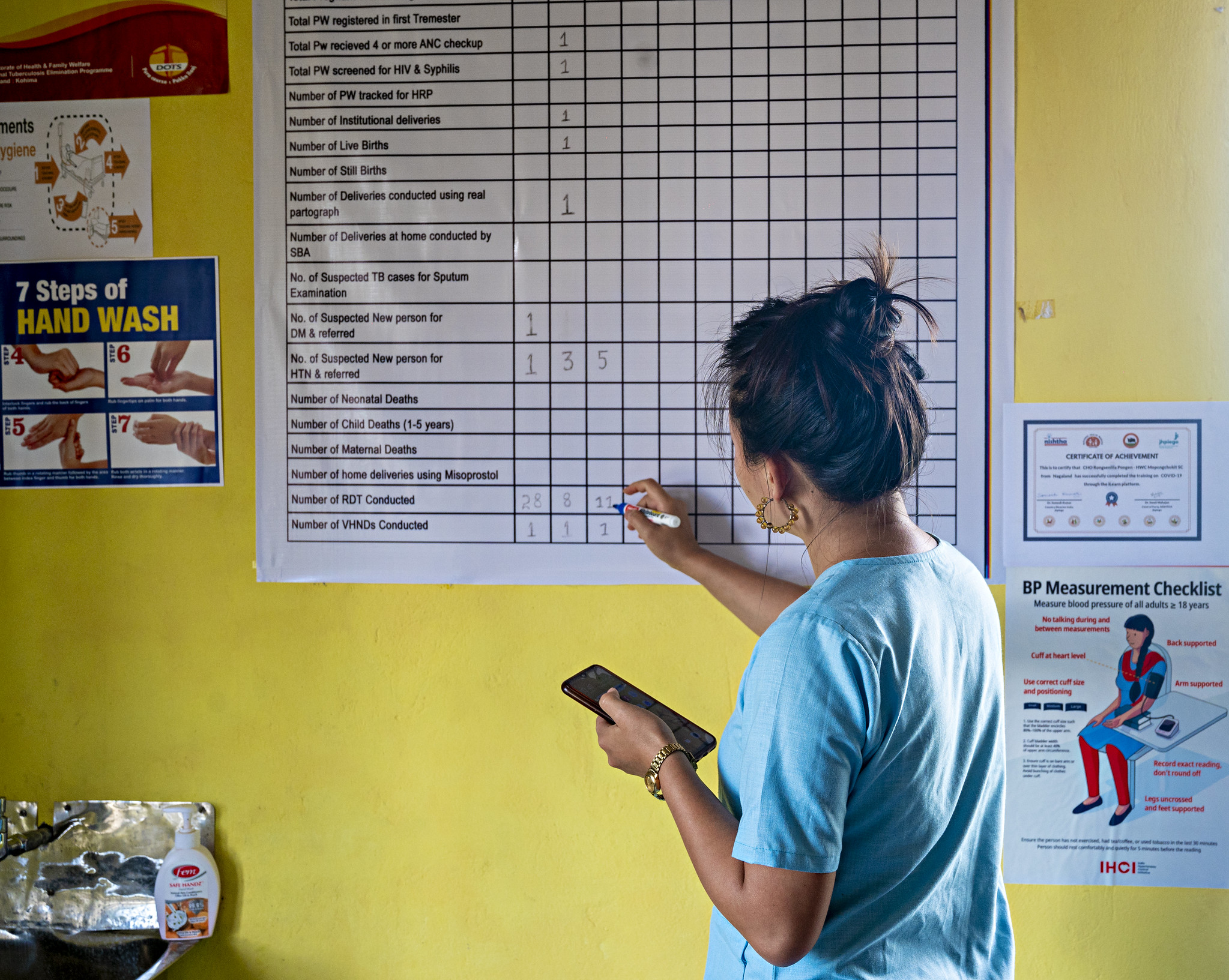
- Make data visible. Post dashboards, charts, or trends where teams can see them.
- Support peer learning. Share what’s working and learn from others’ experiences.
- Advocate for stronger RHIS investments at district and national levels.
- Small changes in how we use data can spark big improvements in how we care for mothers and newborns.