From My Mother’s Pause to Nairobi: What Real Talk Has Taught Me About MNH’s Future
When I asked my 76-year-old mother – a retired midwife – whether she’d trust AI for health advice, she paused. That pause has stayed with me.
It wasn’t rejection. It wasn’t endorsement. It was consideration, the kind that comes when experience meets change. And in many ways, that pause captures where maternal and newborn health stands today.
We’re at a crossroads. And pretending otherwise isn’t helping anyone.
Why Real Talk?
AlignMNH’s Real Talk was built around questions we often whisper in hallways but rarely say out loud. No slide decks. No polished positioning statements. Just honest conversations about uncomfortable truths.
Over three sessions, a pattern has emerged. Each conversation has revealed a tension, and each tension has led naturally to the next.
Real Talk 1: The Workforce Gap Won’t Close. Now What?
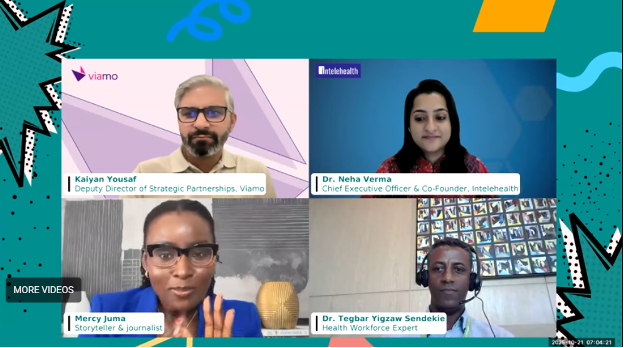
We began with a hard truth: the global health workforce gap is not closing fast enough, especially in regions where the need is greatest.
Africa carries 52% of the global health workforce shortage while shouldering 70% of the opportunity to reduce disease burden. Even with aggressive interventions, we’ll only meet half the need.
Tough fact, right? But the panel didn’t spiral into despair.
Instead, they asked: If we cannot produce enough health workers quickly enough, how do we deliver care differently? How do we blend human empathy with new tools without losing the heart of care?
The answer wasn’t replacing midwives with technology. It was about amplification – telemedicine connecting rural midwives with specialists, AI flagging high-risk pregnancies, digital tools supporting continuous learning.
But another truth surfaced: innovation cannot compensate for a workforce that is underpaid and undervalued. Technology can extend care. It cannot replace dignity.
And that led us to the next uncomfortable question. If we need innovation to bridge the workforce gap, who pays for it?
Real Talk 2: Who Pays for Innovation That Saves Lives?
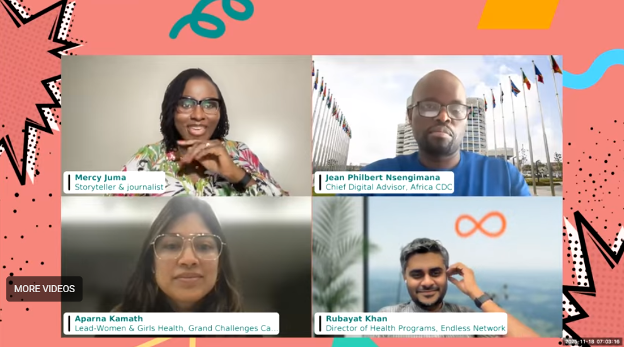
We know there are innovations that work. And yet, too many of them stall after pilot phase — caught in what one panelist described as “the graveyard of pilots.” This conversation forced us to confront a distinction that global health sometimes avoids: the difference between need and demand. According to PATH, 87% of digital health pilots in LMICs never scale. That’s not inefficiency, it’s lost lives.
Mothers may need care. But unless someone is willing and able to pay for the system that delivers it, innovation cannot survive.
We discussed fiscal constraints, procurement realities, trust gaps between governments and innovators, and the myth that government handover is the only endgame.
If governments are expected to lead, then financing models must evolve. Which brought us to the third conversation.
Real Talk 3: Crystal Clear or Clear as Mud?
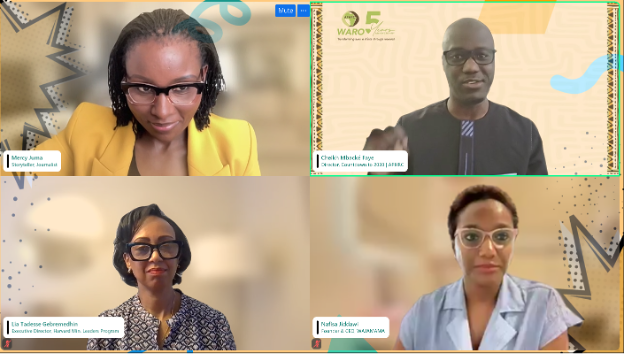
Everyone is talking about “prioritization.” “Efficiency.” “Best buys.”
So we asked our audience what really drives MNH decisions.
Only 20% believed evidence drives MNH prioritization. The other 80% pointed to budgets and politics. That result alone tells a story. Evidence matters. But decisions live inside political systems, fiscal ceilings, competing priorities, and public accountability.
We heard clearly that what looks “crystal clear” at global level often feels layered, even muddy, on the ground.
Best buys can help sharpen focus. But they can also flatten complexity. And perhaps most importantly: country ownership is not a slogan. It is about domestic financing, political commitment, and context-specific decision-making.
The Thread Connecting It All
Looking back, I see the through-line:
- If the workforce gap won’t close, we must innovate.
- If we innovate, we must finance sustainably.
- If we finance sustainably, we must prioritize intentionally.
- And if we prioritize intentionally, countries must lead.
These aren’t separate conversations. They are one systemic story. Which leads us to the next chapter.
Real Talk 4: Will MNH Survive the Global Health Reform Agenda?
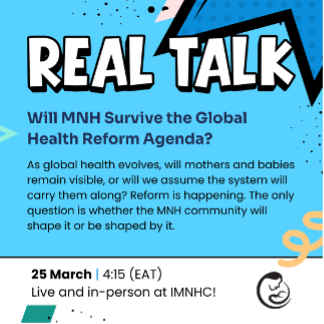
LIVE at IMNHC 2026 in Nairobi, Wednesday 25 March at 4:15pm EAT, Auditorium, The Edge Convention Centre.
The global health architecture is shifting – toward integration, primary health care, domestic financing, and country ownership. These shifts create opportunity. But they also create risk. For Africa, the conversation centers on sovereignty: countries leading their own health agendas and moving from recipients of aid to co-architects of global health.
So, the question for Nairobi is not abstract. It is this: Where do mothers and babies fit in this conversation?
As global health evolves, will mothers and babies remain visible, or will we assume the system will carry them along? Reform is happening. The only question is whether the MNH community will shape it or be shaped by it.
What we’ll explore in Nairobi:
- What does global health reform mean for MNH practitioners?
- Is integration into PHC a threat or an opportunity?
- How do we stay visible within “One Plan, One Budget, One Report”?
- What can the MNH community do right now to keep mothers and babies at the center?
The reform is happening whether we engage or not. The only question is whether we’ll shape it – or be shaped by it.
We do not move forward by avoiding tension. We move forward by naming it and then building through it.
What I Know After Three Real Talks
After moderating these conversations, a few things are clear to me:
- The community is ready for honesty.
- The challenges are interconnected workforce, financing, prioritization, governance.
- Solutions exist but they require courage, coordination, and country leadership.
- And above all, local voices must remain central.
My mother’s pause wasn’t about fear of change. It was about weighing what must be preserved against what must evolve. That is the work before us now.
If Real Talk has taught me anything, it is this: We do not move forward by avoiding tension. We move forward by naming it and then building through it.
Join us at IMNHC 2026 in Nairobi for Real Talk #4.
Because when it comes to saving mothers and babies, we can’t afford to stay silent.
Mercy Juma is a storyteller and strategic communications specialist who moderates the AlignMNH Real Talk series.